How the Justice for Soli Campaign is Changing the Future of Canadian Prison
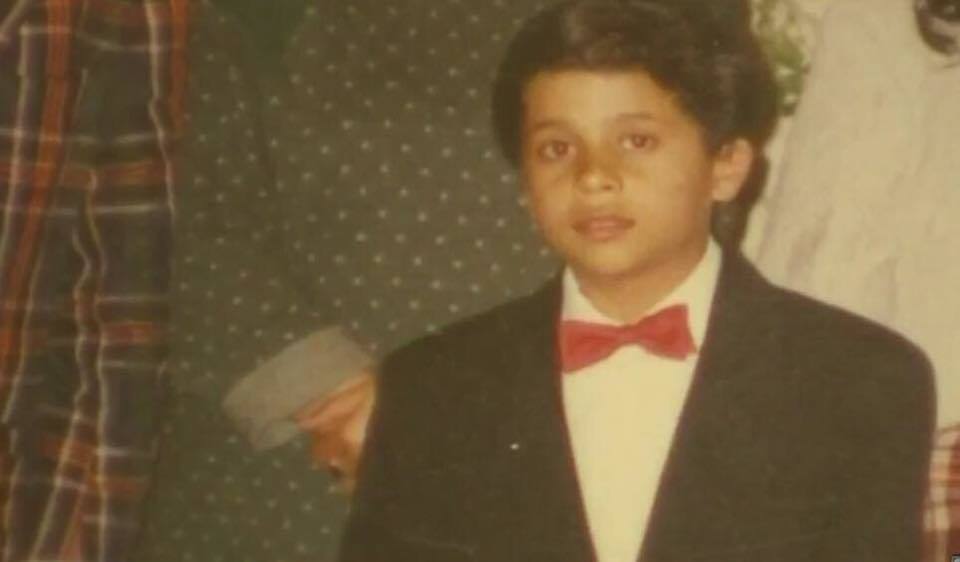
In this post I would like to talk to you about a man named Soleiman Faqiri (Soli). This past week I had the privilege of interviewing his brother, Yusuf. He provided some really amazing insight on who Soli was, and the amazing life he lived.
Soli’s family had experienced a lot of hardship, having come to Ontario from Afghanistan as refugees. His parents wanted a good life for him and his siblings, and from what Yusuf told me, it sounds like Soli made his parents incredibly proud.
Yusuf told me that Soli had a gifted mind. He played football and rugby in high school, and was incredibly well regarded amongst friends. He was enrolled in the University of Waterloo’s engineering program, and he also taught his mom how to read.
Soli helped take care of his nieces and nephews for his sister. When his mom gave birth to his younger brother, Soli stepped up. He helped change his brother’s diapers and made him formula, and he taught his other brother how to drive. It sounds like Soleiman had an innate desire to help people.
People loved Soli because of how emotionally intelligent he was, how helpful and honest he was, and how he supported his friends with mental health challenges.
Soleiman has three nephews and three nieces, all six of which are deeply impacted by his legacy. His oldest niece and nephew have beautiful memories of Soli holding them in their lap, and giving them a kiss on their cheek. He took care of them so well.
I asked Yusuf if he had any stories he would like to share about Soli. He told me that several years ago, in the mid December, during -12 degree weather, Yusuf had to catch a bus to get to work. Yusuf was rushing out the door and forgot to grab his toque. Soleiman noticed how cold it was and ran out of the house after his brother with a toque to make sure Yusuf didn’t get cold.
So, how is Soli’s story relevant to my blog?
Well, in December of 2016, Soli was arrested and was put in jail for 11 days. He never had a chance to go to trial to plead his case, nor did he ever have a criminal record. During his time in jail, a judge had ordered that Soli be moved to the Ontario Shores Centre for Mental Health Sciences, where he could be properly treated. This never happened. Instead, Soli was put into solitary confinement by prison guards, where he was beaten to death. The official coroner’s report showed that Soli had 50 bruises on his body, none of which were related to any life saving measures. No charges or arrests have been made.
Yusuf made a promise to Soleiman that he would not let his death be the final chapter in his life. Yusuf has held protests around the country, and has met many families who have unfortunately have similar stories to share.
The coroner’s inquest for Soli took seven years to fight for. Yusuf acknowledged in our interview that there are families who don’t have the means to fight like this. People who live in rural towns, single parents, or people who don’t speak English or French, for example, might not have the means to fight the way that Soli’s family is fighting. So, this fight isn’t just for Soli. This fight is for everyone who has been failed by the Canadian justice system.
Even after the inquest proved that Soleiman’s death was a homicide, the government has done nothing.
Yusuf wants to let people know that this fight will not end until we transform correctional facilities. Even a judge knew that the best place for Soli was not the inside of a jail cell. So, why wasn’t he transferred to a mental health facility?
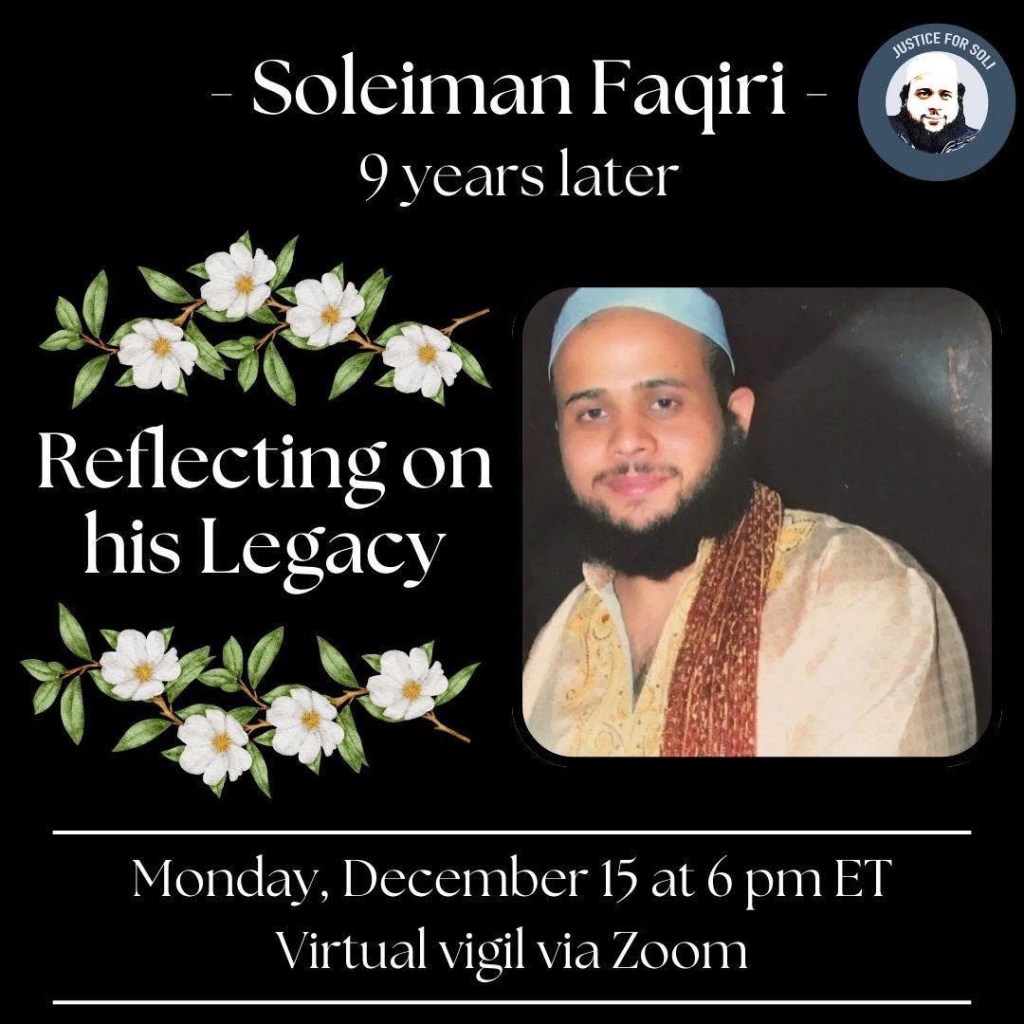
There will be a vigil held for Soleiman Faqiri on December 15 at 6:00 p.m EST. If you would like to attend and join the fight to find justice for Soli, you can register here.
I would like to send a huge thank you to Yusuf, for lending me his time, sharing some beautiful stories about Soleiman, and for continuing the fight for justice.
I would also like to thank Yusuf and his family for continuing the fight for justice and prison reform in Canada.



 Rise and Reform
Leave a comment